
How do our folk musician ambitions manifest themselves in the music we listen to? What comes out of your headphones and speakers matters, and the music we get to hear live is generally highly inspiring to our own practice. Some of us find it very easy to listen to music while we do other things. Almost everyone can listen to music while they drive a vehicle or clean the house, and some of us can listen to music at work. Others don't have a habit of listening to music at all, even though they are great musicians, or can’t even tolerate it in the background.
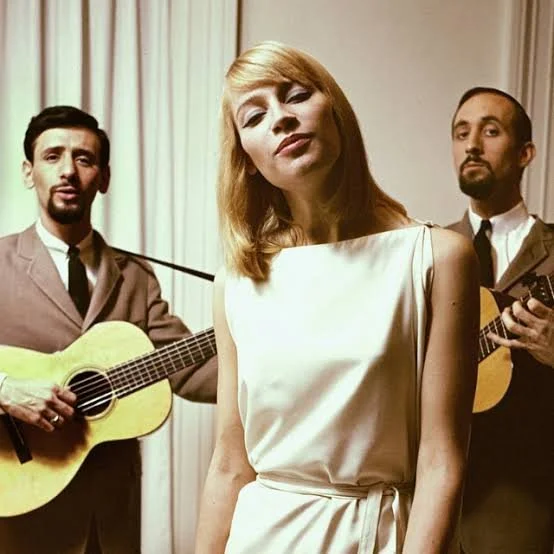
Peter, Paul, and Mary was the first concert I remember attending in the early 1980s. I can’t remember if I stayed awake long enough to hear Puff the Magic Dragon.
I encourage all ambitious folk musicians to have a listening practice. If you are able to sit and listen to music through high quality speakers without doing much else, you'll get the most out of the listening experience. I absorb music equally well sitting at home alone as I do riding transit or jogging in the woods, three cases where I can give a lot of my attention to listening. I slightly favor being active when I hear music so that my endorphins are pumping and I have a more emotional response. A cup of coffee in the morning also does the trick. If you don't have any music listening practice and don't feel you have a time and place for one, consider ways that you can squeeze a bit of music into your other activities. Do you scroll on a device when you're tired? What if you queued up Youtube live performances of songs and artists you are interested in instead? I find that videos of live performances are among the most emotional jolts I can give myself.
One of the first of many ridiculous music videos I first remember watching ad nauseam in the early 1990s, U2’s Numb. There were plenty of great videos too.
If you do have time for listening at length, consider how you are listening to artists. Many of us grew up before on-demand streaming, either with records, tapes, CDs, or purchased online music. A lot of us also grew up at a time when radio and maybe music videos ruled our world. As a child of the '80s and '90s, I was privileged to have excellent "oldies" radio pumping out rock and roll and Motown from the '50s and '60s, classic rock from the '60s and '70s, pop in my early years in the '80s, then alternative & hip hop radio and music videos in the '90s. Being at the whim of the record labels, pop charts, and DJs had some advantages because we had to wait for our favorite songs to come on and learn to like (or hate) them by hearing them a thousand times. We also had a common repertoire to share with our friends. If a song or artist on the radio was exciting us, we bought their albums and went to their concerts. In the 2000s the formula began to unravel as quality bands playing instruments were more and more excluded from the radio world and replaced by computerized music. At the same time, online music purchasing quickly changed to streaming on-demand. The result was that most of us no longer got to know a diverse and high quality body of popular music played on instruments with talented singers. So we abandoned the radio and started streaming music we liked on-demand without listening to entire albums.
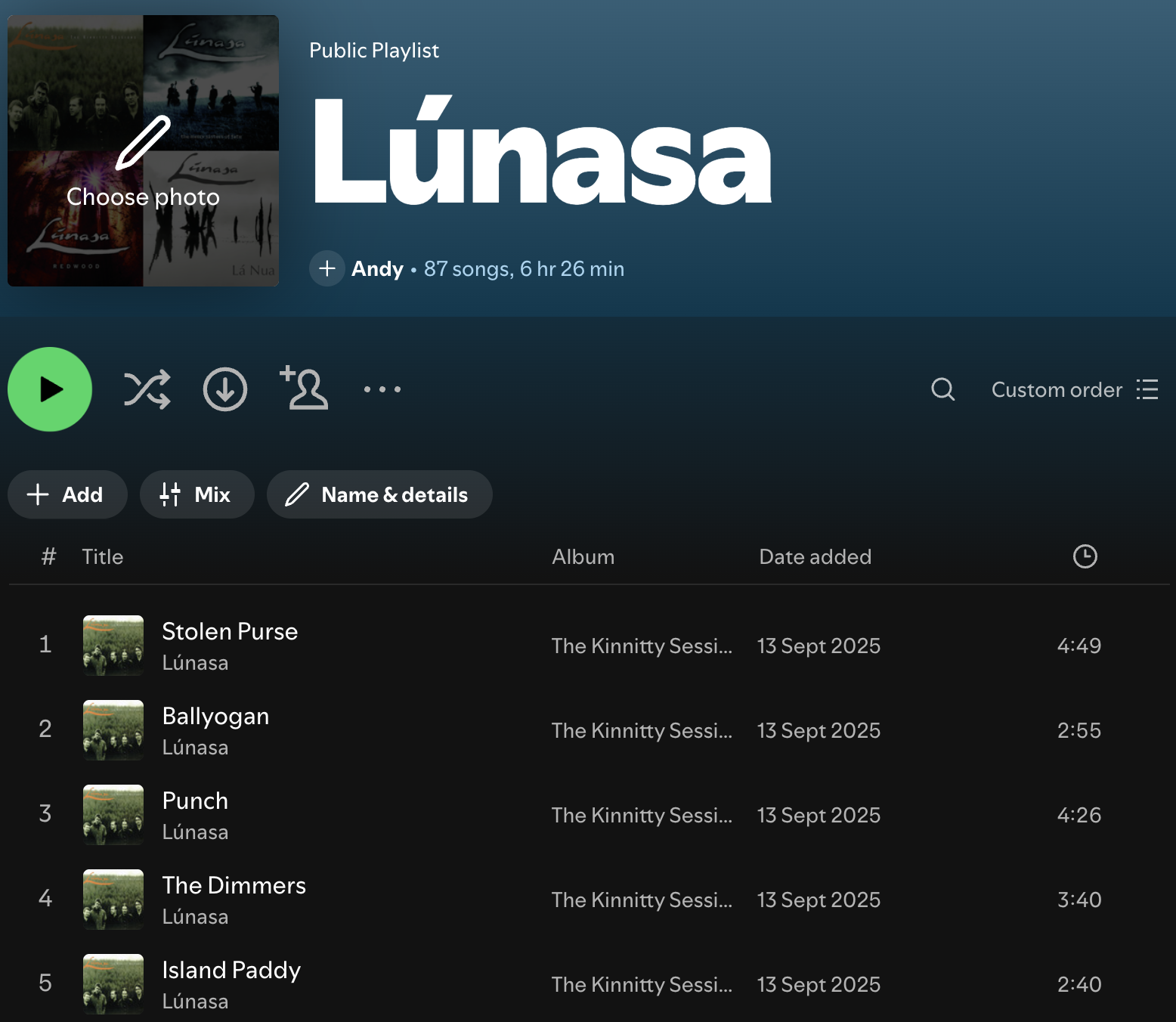
Drag every album in chronological order starting from the earliest into a playlist. This is a quick easy way to get to know an artist or group. You might have to buy other albums later that aren’t on a streaming service.
What does any of that have to do with folk music? Thanks to streaming, we similarly listen to thousands of tracks of folk music from a playlist or radio station, usually randomly. It's extremely useful for discovering artists, songs, and tunes that we might not otherwise have heard. But we need to have a little bit of discipline to listen to albums straight through. Those albums might be a hundred years old or released last Wednesday! It's hard to sort it all out. I recommend that you use a music stream to identify songs and tunes you like. Link to the albums of those tracks and save the album to your online library. Alternatively, make a playlist of all the albums of an artist in chronological order. Then, whenever it occurs to you, stop playing the random stream and listen to an album or artist straight through. There are also a lot of folk artists who do not publish their albums to streaming services. If you hear an artist you like, consider getting a physical CD or LP at a concert or finding them on an online purchase service like Bandcamp.
Nick Offerman’s slow TV Yule Log. I heard he had some music or a podcast on for the “silent” 45 minutes.
With cold weather and the holidays coming up, it might be a great time to cozy up in an armchair next to a fire with your favorite beverage and listen to an album or whole discography. If your family or partner tolerates it, why not do it as a group? As a youth, I fretted when I listened to the Beatles that I couldn’t tell if John or Paul was singing, and I couldn’t count the beat or distinguish which instrument was which. It didn’t take long to work itself out, and I think it’s great to help young people listen to and analyze what they’re hearing, if they are willing to suffer your pedagogy!
At the Irish and bluegrass jam-sessions I attend, albums still hold weight. Participants reminisce and rave about albums both old and new. Listening to albums really matters for getting to know an artist or band's style and understanding how it evolves over the years. It's especially clever and kind to buy albums of emerging artists. You help support their work, and you never know when you will run into them at a show or session and floor them by saying, "I loved your 2004 album Blah Blah Blah and get teary-eyed at your performance of Something or Other".
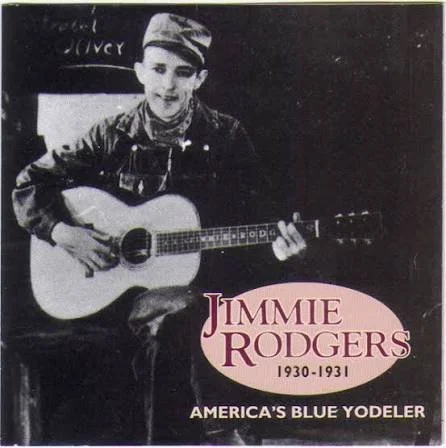
If you are having trouble sitting through an album because you are used to random streaming, I recommend starting with live albums. There tend to be stories, jokes, and other special moments that keep you more engaged. When you do get to studio albums, try to marvel at the art of putting all the various instruments and vocals together in a well produced product, paying attention to individual instruments, vocal techniques, and the like. If you know a bit about the artist or group, try to imagine what was going through their minds at that point in their recording life. When I hear old Jimmie Rodgers albums, one of the fathers of country music who was famous for yodeling, I think about how he was dying of tuberculosis in his early 30s, and nevertheless managed to pull off (mostly) solo recordings that sold strongly throughout the Great Depression and influenced a century of musicians.
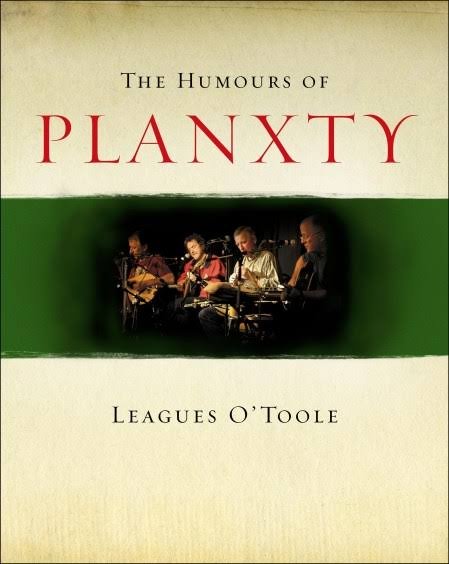
Leagues O’Toole’s Planxty biography interviews inspired the band to reunite for concerts.
As a musician of a folk genre, you want to be a bit of a folklorist who can identify an artist or band when you hear their work and understand what distinguishes their musicianship from others. If you only randomly stream music, you won't be able to do this. I also highly recommend finding biographies and autobiographies of famous artists and groups. These are educational and entertaining and you can listen to the albums as they are mentioned chronologically in the book. You can also get useful biographies on streaming services and of course read those great old-fashioned liner notes in LPs and CDs.
Happy Listening!
—Andy Likuski