
Remembering Tunes
Think you’re bad at remembering tunes? You’re probably not! You just need a strategy. We all have had to learn how to remember language, kids songs, work skills, and much more; the ability is inside us all. You might have created stories about how you alone can't learn, memorize, or remember a large quantity of things. More likely you tried to learn without memory tricks and spaced repetition, the technique of regularly re-exposing yourself to the material in order to remember it.
Folk tunes are designed to be learned aurally and passed down orally. This means that they are by design fairly easy to listen to and imitate without sheet music. The way the tune is played changes over time and from musician to musician, so you’re your never locked into reciting one rigidly. Folk tunes are especially easy, compared to classical pieces and jazz, because successful tunes were written or stumbled upon for of their catchiness, not because of their complexity or to show off the composer's genius.
Say you are trying to remember a tune that you learned to play entirely at some point in the past. Here's a short playbook for getting the tune back in your fingers or lips.
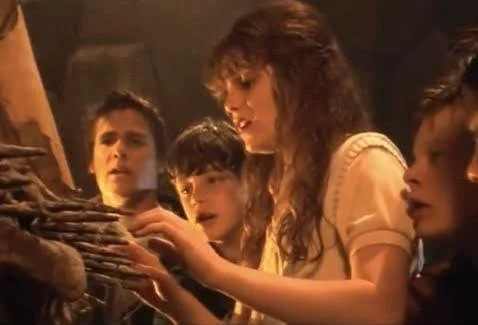
Ever feel like the Goonies playing the organ?
1. Start on your own. Play as much of the tune as you can first without listening to the recording. If you play a phrase and it seems correct, check if you have any associations with learning or playing that phrase. You might have an a-ha moment, like “oh yeah, it was that weird sequence in the low octave that has never come up in any other tune” or something more mundane but useful “I remember how it started with my first three fingers doing a triplet”. In other words, give your brain and muscle memory a chance to do what they are evolved to do.
2. Find a hook into the tune. If you can’t remember the start of the tune, try to recall the start of the B part or literally any other phrase of the tune that might put your playing on autopilot. I’m amazed how often I find one phrase of a tune I know and then am able to circle back to the start of the tune that I had forgotten. You can’t do this out loud at a session, but at practice time it's a doable feat to jog your memory with just one snippet.
3. Listen to as little of the recording as possible. When you're sure that you are stuck or playing something wrong, listen to the start of the recording and only as much as you need to execute the basic tune correctly. For me, it’s often enough to hear my teacher play a few warmup notes on the recording before they even start the tune!
4. Relearn just the basic tune. I often get frustrated when I'm relearning a tune from a recording and realize I forgot all the extra bells and whistles that I have worked hard to learn. This includes embellishments, variations, introductions, or tags (a short instrumental that ends a tune). In other words, everything that varies from one musician's recording to another's. But when we are relearning, we want to concentrate on reinforcing our memory of the phrases of the tune, especially the first phrase of the tune.
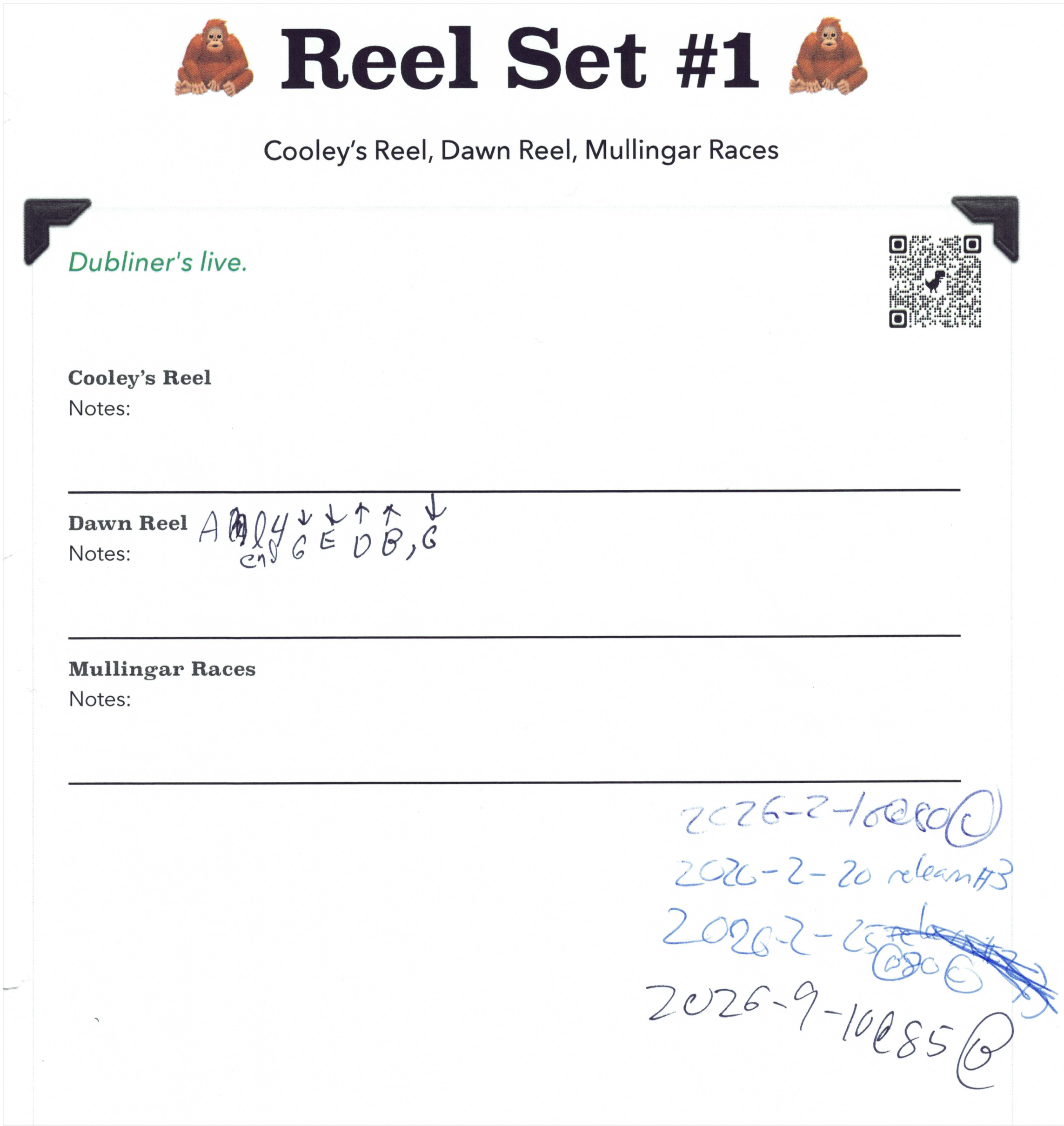
An example practice sheet for a three-tune set. I group sets by animals to help remember them.
5. Finally, relearn the bells and whistles. You'll need to relearn these extras by listening to the recording and working the extras one by one back into your version of the tune. But every time you take a few minutes to relearn them, the more likely you are to solidify the details for good.
6. Play to a metronome or backing track. Once you can play the complete tune again, start playing to a beat and get the tune up to the tempo that you believe you can play at. This might be 5bpm (beats per minute) above the last time you practiced it, or the same bpm but a higher quality of playing. If you have backing tracks for each tune or tune set, the last tempo you used will be stored there. I'd also write down the tempo and quality (e.g. an A to D grade) on your practice sheet for the tune. A practice sheet is a printable digital document that lists the tunes in the set, your personal association with the set, a QR code to the backing track, a section for notes for each tunes, and space for your practice log.
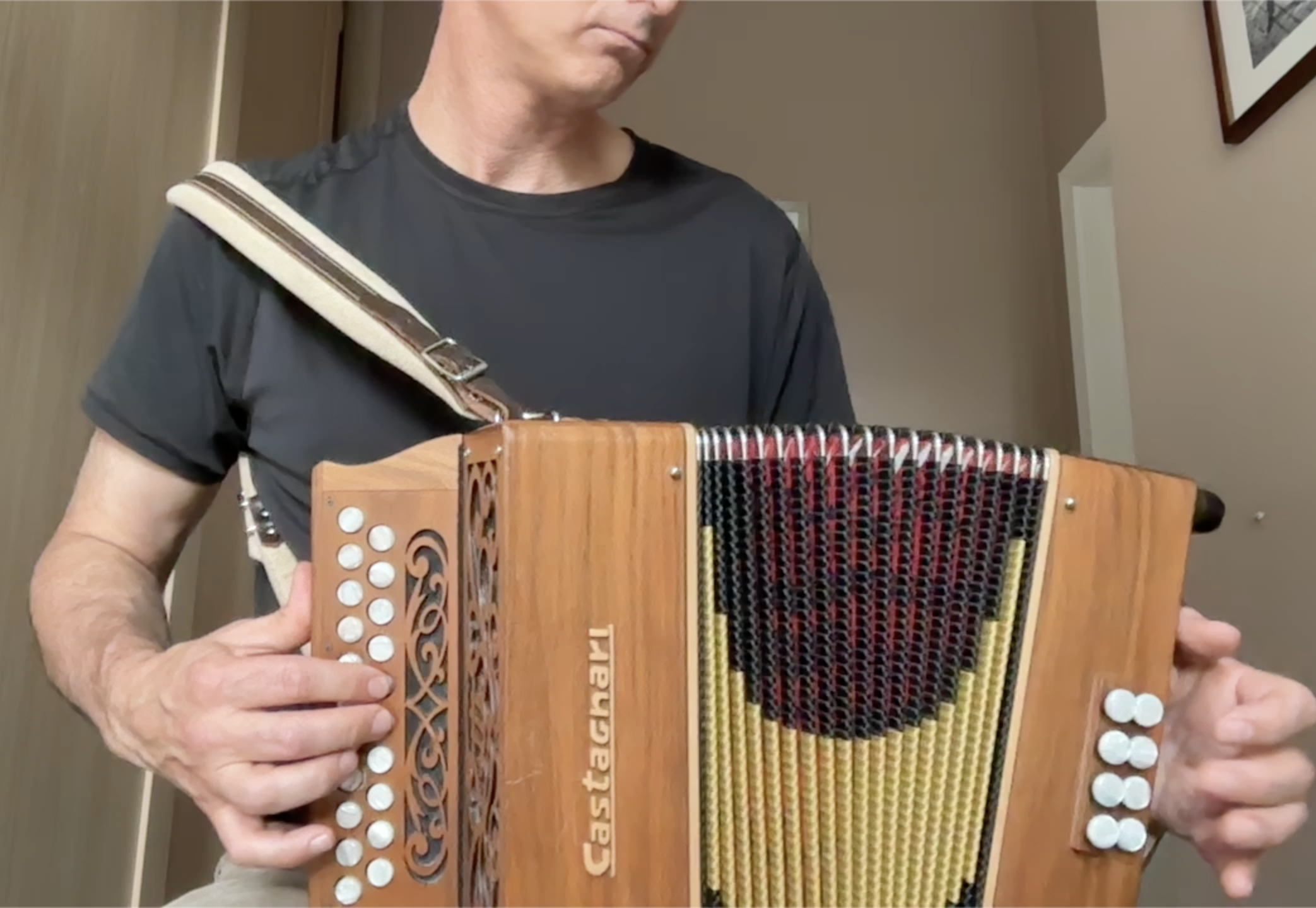
Practice videos are embarrassing but important!
7. Record yourself. Record yourself playing to a metronome and backing track and save the file named by the tune or tune set with the tempo and grade. I have hundreds of these files, such as “Over the Moor To Maggie, Fred Finn’s, The Hunter’s House@85(B)”. They are embarrassing to listen to, but important for documenting when and how you played. Recording changes the way you play, making you more alert about maintaining time and quality. It probably also improves your ability to recollect tunes later.
Memories and Aural Associations
“Roses are red, violets are blue”
Tunes and medleys of tunes are your music vocabulary. You can think of a tune like a saying, such as “It takes one to know one." and a set of a few consecutively played tunes like a short poem or nursery rhyme like "Roses are red, violets are blue…” or “Humpty Dumpty sat on the wall…”. Some sayings, poems, and nursery rhymes are easy to recall and use because they were a ubiquitous part of your upbringing. Others are less commonly heard, or perhaps they are in a foreign language so you struggle to recall them.
It helps to give tunes and tune sets a bit of context to remember them by. Try giving every tune or set your own story. "I used to always play this set with Sara on Saturdays". "My teacher told me that Michael Coleman recorded this set a hundred years ago!". "I get the chills when we switch from Fergal O'Gara's to the Old Bush". Challenge yourself to look at a set you've learned in your list of tunes. What is your story? Can you reliably hum or hear the first few notes of each tune? How does it sound at the start of your teacher's recording or Willie Clancy's or Planxty's? Can you hear the pipe drone, the backing guitar kickoff, or your teacher fiddling around for the right notes to kick off the recording? Write down a short story or hint under each tune or set in your list and on each tune's or set's practice sheet. This will ensure that you have an association with each and have a better chance of recalling the tunes when you want to play them.
Serendipity
Take advantage of serendipity: When you are actively learning tunes, they will frequently pop into your head at unexpected moments and might loop there all day! Rather than considering this a nuisance, use it as an opportunity to reinforce your learning. Do you know what tune it is and what tune set you play it in? Did you learn it last week or last year? Once you have found the correct recording from your instructor or an album recording, think about whether you have been mindlessly looping the entire tune or just one part. Then listen to your instructor's recording and if possible sit down and play the tune or set on your instrument. If you can't identify the tune, hum or play it into TunePal to try to fetch its name. Equally important, if you listen to streaming music or radio like the Irish Radio Siamsa, try to identify each tune you recognize. For Irish sets, you might have to go to thesession.org to resolve the tune name if the recorded track name doesn't list each tune. Look up the exact album on thesession.org and there's a good chance it will be listed with the individual tune names of each track.
The Name Game
John Sheahan & Eamonn Campbell of The Dubliners play the venerable Irish Washwoman
Another memory trick that might work for you is to sing the name of the tune instead of just humming the melody. If you were trying to internalized the venerable tune The Irish Washwoman, it might be effective to sing, "Oh the Irish-hish Irish-hish Irish-hist washwoman" to the melody of each phrase, adding in extra sounds to get the rhythm to line up.
Your Brain, Your Games
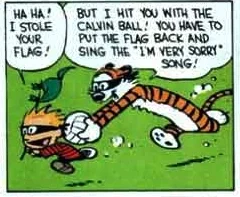
How we remember tunes is like a game of Calvin Ball, the game where Calvin & Hobbes make up the rules and change them to suit themselves. If you want other opinions about how to remember thousands of tunes, search "How to remember Irish tunes" on the internet. We know that thousands of people without PhDs do it, and you might find a documented strategy that works for you. Transcribing every tune to notes, for instance, might be your path to success. I, personally, listen to my teachers' recordings of tunes making up my tune sets in the same order over and over when I'm out and about. I also practice all my sets in the same order as I'm learning new ones. It takes months, but it pays off. I'll write about listening to your recordings and practicing all of your material in a future post.
I hope this gives you a starting strategy for remembering and playing your tunes.
Happy practicing!
—Andy Likuski